One registration, eleven towers: what Phase 1 actually covers
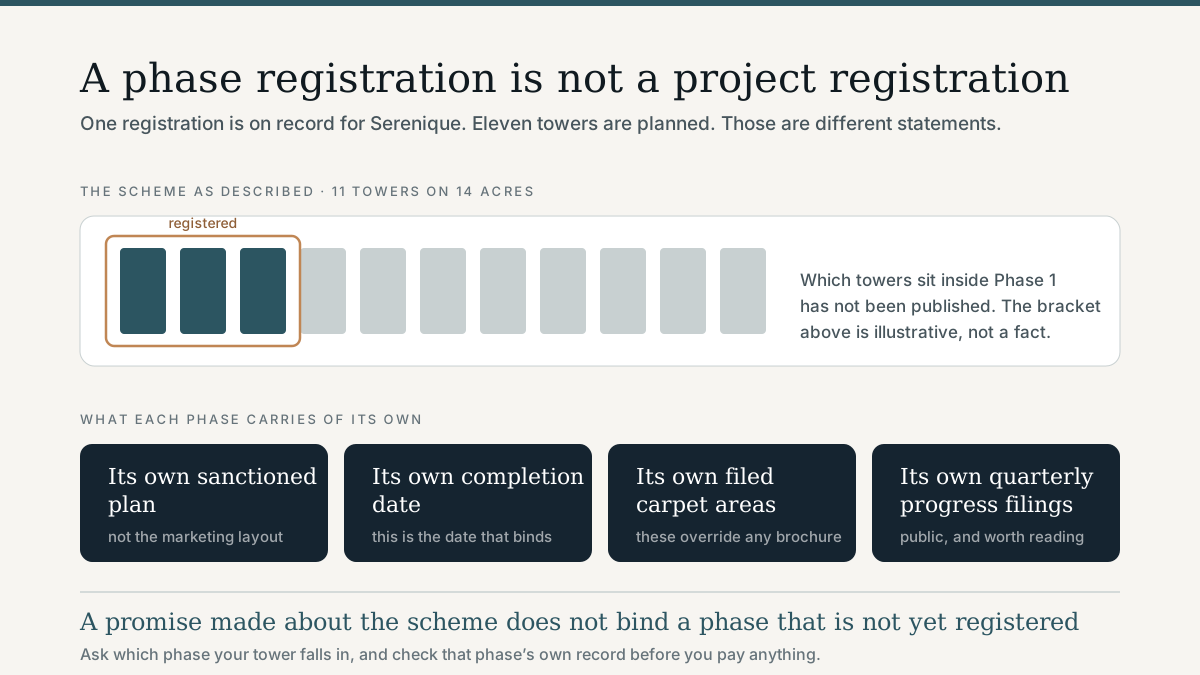
Serenique is registered under Phase 1. The scheme is described as eleven towers. Those are two different statements, and the difference decides what is enforceable.
Blackstone Realty · 8 August 2026 · 6 min read
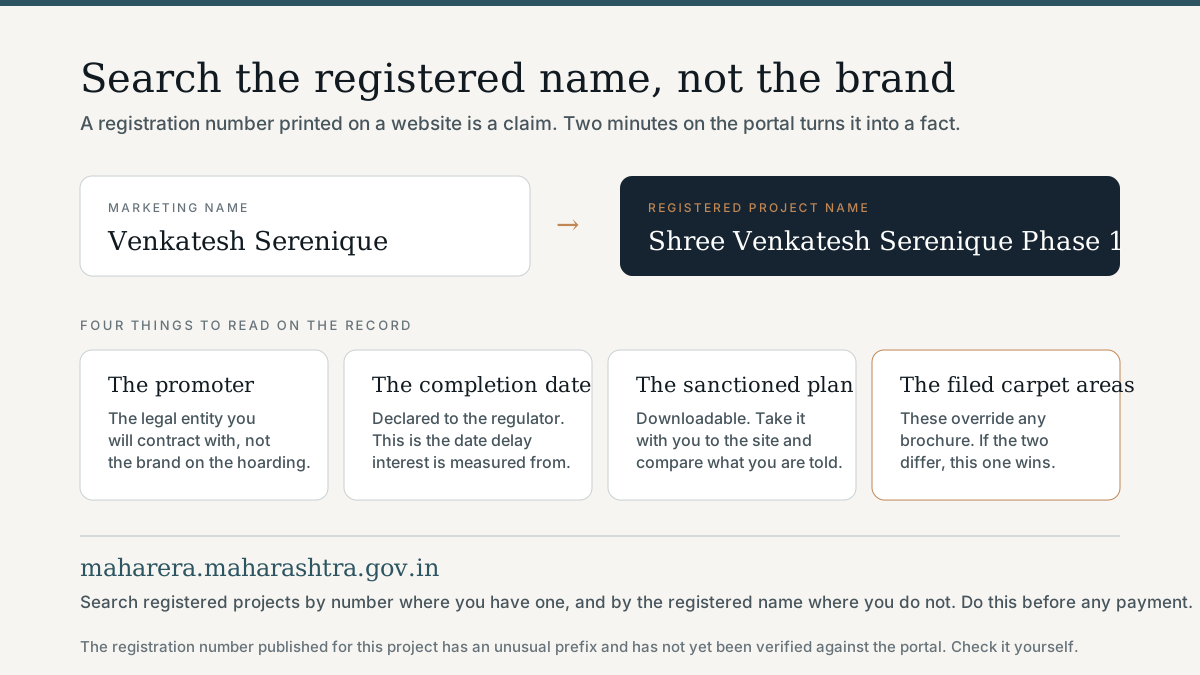
The registered project name for Serenique is Shree Venkatesh Serenique Phase 1. The scheme, as confirmed by the client, is eleven towers on fourteen acres.
Read those two sentences together and a question falls out: which of the eleven towers does Phase 1 cover? Nobody has said, and that gap is worth understanding rather than glossing over.
Why developers register in phases
Because the Act lets them, and because it makes sense. A promoter registers a phase, declares a completion date for it, files its sanctioned plans and its carpet areas, and starts selling it. The next phase is registered when it launches.
The alternative would be registering eleven towers at once with a single completion date for all of them, which would be both slower and less accurate.
So phasing is normal. What is not normal is a buyer assuming a phase registration covers the whole scheme, and that assumption is easy to fall into when the marketing describes fourteen acres and the registration describes considerably less.
Search the registered name rather than the marketing name. Everything below is on the record for whichever phase you look up. · Illustration
What each phase carries of its own
This is the part that matters, because it is what makes a phase registration a legal object rather than an administrative label. Each registered phase has:
Its own sanctioned plan. Not the marketing layout. The version filed with the authority, which is the one that governs.
Its own declared completion date. This is the date a delay claim would be measured from, and it can differ by years between phases.
Its own filed carpet areas. These override any brochure figure for the units inside that phase.
Its own quarterly progress filings, which are public and are the most honest construction update available on any project.
The amenity question this raises
On a fourteen-acre scheme built in phases, the shared amenities are usually delivered with a particular phase rather than the first one.
Which means a buyer in an early phase can be paying maintenance towards a clubhouse and a podium that arrive several years later, alongside living next to the construction that is building them.
That is a normal arrangement and it is not a scandal. It is worth knowing about in advance rather than discovering at handover, and the way to know is to ask for the amenity delivery schedule against the phase you are being sold.
What we have not been told about Serenique
Three things, and we are not going to guess at any of them.
Which towers fall inside Phase 1. The registration exists. The mapping has not been published.
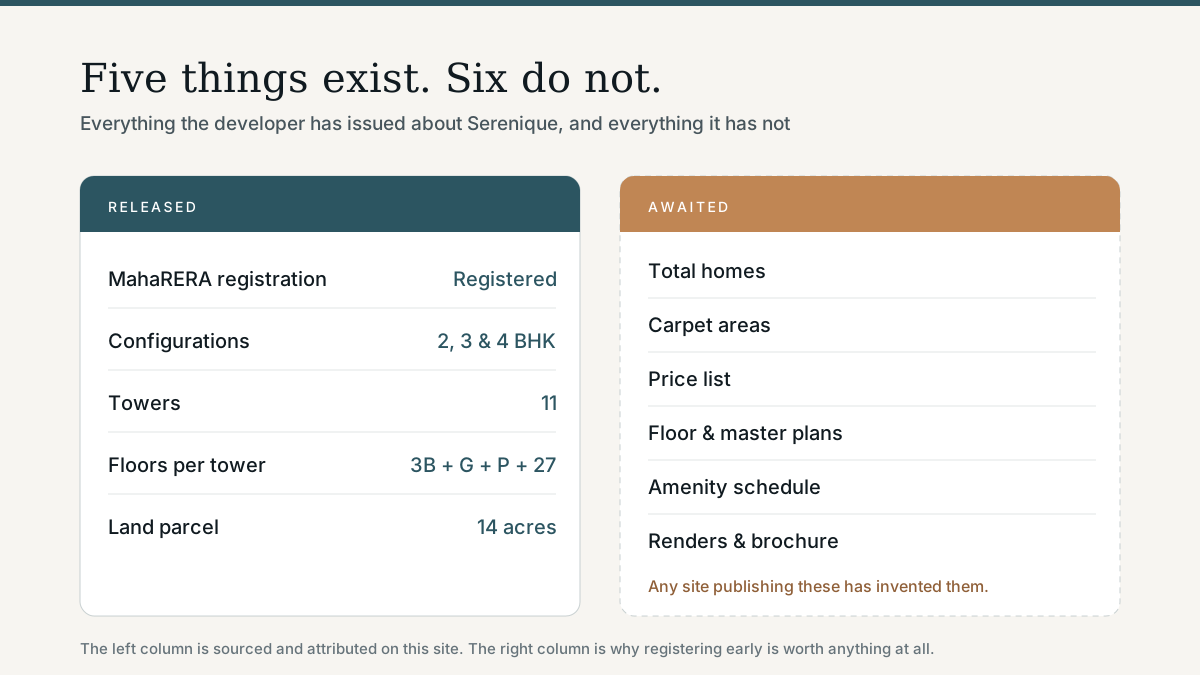
Whether the 2, 3 and 4 BHK mix is registered or planned. The client has confirmed the mix for the scheme. Whether all three configurations sit inside Phase 1 is a different question, which is why this site says the project is “planned as” rather than “registered for” that mix.
The registration number itself. The one published for this project has a prefix that does not match the usual Maharashtra formats. It is reproduced exactly as its source prints it rather than silently corrected, and it needs checking against the portal.
What to ask
Before any payment: which phase is my tower in, what is that phase’s registration number, what completion date is declared on it, and what carpet area is filed for my unit type.
Four questions, all answerable from a public record, and all of them worth more than anything on a brochure.
What has been released at Venkatesh Serenique so far
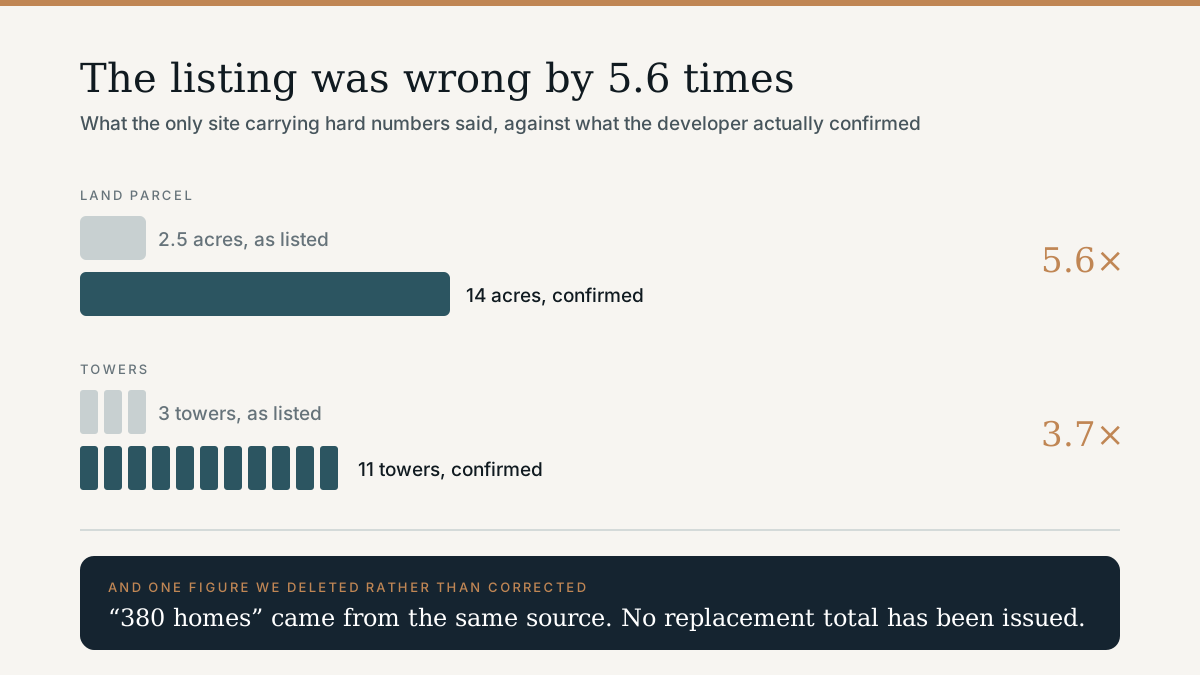
Several sites publish a full spec sheet for this project. Most of it did not come from the developer. Updated 9 August with the developer’s own figures, which corrected two of ours.
One listing site carried the only hard figures for this project. It said 2.5 acres and 3 towers. The real answer is 14 acres and 11 towers, and the gap is worth a case study.
Fourteen acres, eleven towers, and what that scale implies
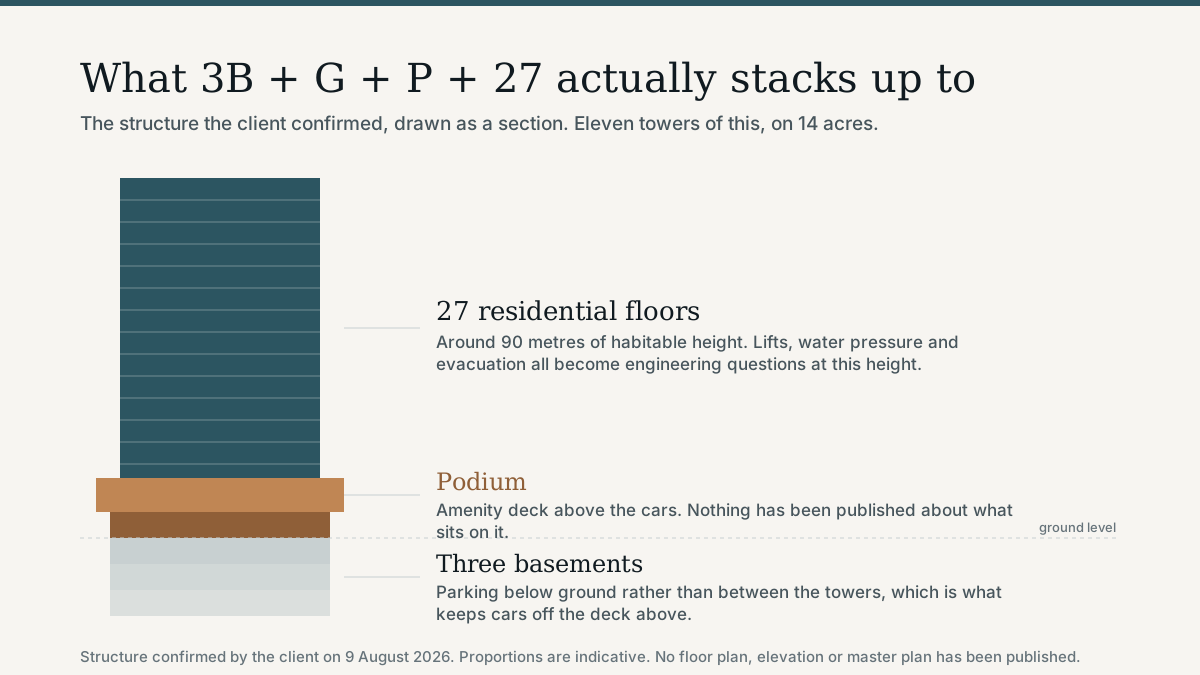
The client has confirmed the land, the tower count and the structure. Here is what those three figures let you infer about the project, and where the inference has to stop.